InfoWorld
-
Seven ways to encourage critical thinking in AI users
Employees are increasingly using large language models (LLMs) and AI agents to get work done. Many are using agents to complete tasks, and others are using LLMs to generate content, vibe coding tools to develop applications, and agent orchestration platforms to automate workflows. According to Kyndryl’s People Readiness Report , while 57% of organizations…

-
Microsoft separates decision-making from generative AI with a new model
Microsoft has launched Decision-1, an AI model that returns probabilities for predefined answers, allowing software applications to use its outputs directly instead of processing a free-form response from a large language model (LLM). The model targets tasks such as classifying requests, prioritizing incidents, and checking AI-generated responses. Microsoft…

-
Local AI on NPUs: Building a zero-cloud photo deduplicator with OpenCLIP
Every new laptop today is marketed as an ‘AI PC’ thanks to a built-in Neural Processing Unit (NPU). But beyond chatting with small local LLMs, what practical work can this silicon actually do? Recently, I hit a wall with a classic IT problem: data gravity. I had about a hundred gigabytes of scanned family photos that needed to be organized and enhanced…
-
Screencasting in the AI era
During my tenure as InfoWorld’s blogger-in-chief I became fascinated with narrated videos of software in action. Tools existed to do that kind of storytelling but the explanatory power of what came to be called screencasting had not yet been widely recognized. Although the medium became a standard way to demonstrate software, and I went on to produce and…
-
AI distrust is GitHub’s opportunity
Developers have never been more inclined to use AI, yet never less inclined to trust its output. In Stack Overflow’s surveys, the proportion of respondents using AI tools in development keeps climbing (44% in 2023, 62% in 2024 , and 83% in 2026 ), but trust hasn’t kept pace. In the 2025 accuracy question , only about 33% trusted AI’s output, while 46%…

-
The best place to run AI agents
Every few weeks, another enterprise leader asks me the same question: Should our AI agents run in the cloud or in our own data center? It sounds like a simple either/or, but it is the wrong way to frame the decision. Agents are not a single workload. They are orchestrated collections of model inference, tool execution, memory state, and integration logic…

-
Is your software product ready for the Cyber Resilience Act?
The European Union is rolling out new cybersecurity requirements for hardware and software products sold in the EU market. Aimed at ensuring that all products “with digital elements” are safe from cyber threats, the Cyber Resilience Act (CRA) has implications for the manufacturers of everything from smartwatches and smartphones to data center and industrial…
-
Why data work is one step behind on AI
One of the reasons programmers “got” agentic AI first, in the sense that it could meaningfully alter their productivity and effectiveness, is because code could be checked. They turn agents loose on a function, read the diff, run the tests, and decide whether to keep it. Output comes back to them in a form they already know how to read, so trusting the…

-
Hands-on agentic development with Google’s Antigravity IDE
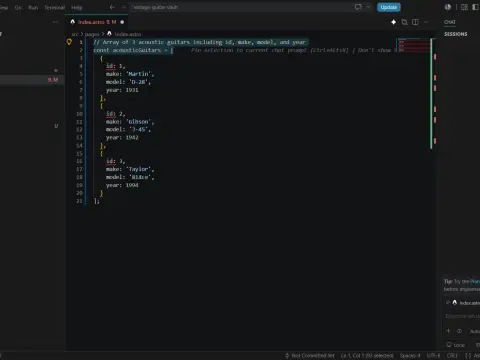
Google Antigravity IDE is one of the most sophisticated integrated development environments available today. In contrast to Antigravity 2.0 , which focuses exclusively on managing agents, or Antigravity CLI , which is a way to interact with agents from the command line, Antigravity IDE covers the spectrum from a basic code editor, to an auto-completion…
-
The best new features in Python 3.15
Python 3.15 is one of the most feature-packed Python releases in many a moon, and the general release has just arrived. Here’s a rundown of the biggest, boldest, and most important innovations, changes, and fixes. Lazy imports A long-asked for feature, lazy imports allow imports to be processed only when they’re actually used by the program. For…

-
Lightwell project filters out 400 Java library vulnerabilities
Lightwell, the open-source security initiative set up by IBM and Red Hat, has identified more than 400 previously undiscovered vulnerabilities in widely used Java libraries — and now the companies are inviting customers to submit their own code dependencies to a new service, Lightwell Clearinghouse, for review. They’ll be looking for bugs such as the…

-
OpenAI reports three new incidents of misalignment
OpenAI continues to report incidences of “misaligned” behavior by its AI models, with three new reports dropping on Oct. 2. However, they describe relatively minor issues compared to previous alignment reports and notices covering its attacks on Hugging Face , Rubygems , and a German programming wiki . The first of the new reports described how an instance…

-
As AI agents grow, vendors carve out decision-making as a separate model layer
As enterprises struggle to balance AI budgets with the demands of scaling agentic applications, they have been increasingly looking for ways to make those systems more efficient, from hard-coding deterministic decisions to using smaller models for specific tasks. TypeSafe’s Jev , released last month, introduced another option: using a specialized model to…
-
Neoclouds and the enterprises that need them
I’ve been tracking the rise of neoclouds in the past couple of years, and I’ll start by admitting that the numbers are genuinely staggering. Synergy Research Group reports that neocloud revenues hit $9 billion in the fourth quarter of 2025 alone , up 223% year over year, exceeding $25 billion for the full year. The market is forecast to approach $400…

-
AWS takes aim at runaway AI agent behavior with Strands Box
Amazon Web Services (AWS) has introduced an open-source sandbox for AI agents that allows developers to restrict their actions based on previous behavior, seeking to address security risks as enterprises give autonomous systems greater access to applications and data. The tool, called Strands Box, combines operating system-level isolation with policies that…

-
AI-powered data pipeline observability: Stop monitoring and start preventing
Devops tools are making it increasingly easy to monitor data pipeline failures. But in many cases, those alerts are already too late. Take marketing campaigns, for example. Every mistake in data for marketing and sales has a trickle-down effect on revenue. William Flaiz , founder of CleanSmartLabs , shares one example. One of his B2B clients increased their…

-
AI changed my role before it changed my software
My first attempt at vibe coding face-planted. I shook my head and stared at the screen. Well, this is obviously not for me. I became convinced the problem was the AI. I had uploaded the working Excel spreadsheet that already contained the business logic, workflows, and calculations I wanted the AI to replicate. How hard could this possibly be for “…

-
AWS’ support for Iceberg materialized views on Redshift could help lower analytics costs
AWS has added support for Iceberg materialized views to its managed cloud data warehouse service, Amazon Redshift, in an effort to help enterprises lower analytics costs. Materialized views are precomputed, stored results of queries that data warehouses such as Redshift can use to avoid repeatedly running compute-intensive queries when the same analytical…
-
Encrypted instructions trick Copilot CLI into spilling developer secrets
GitHub Copilot CLI can be made to read sensitive files from a developer’s machine and send their contents to an attacker from a single web page. Security researchers at Adversa AI said the new attack technique, dubbed Cryptographic Context Injection (CCI), hides malicious instructions inside encrypted content. These instructions are treated as trusted…

-
Cursor writes all my code now
I was at the gym yesterday, talking with a relatively new CrossFitter named John, and naturally he asked me what I do for a living. I said I write software all day. But it hit me—I don’t actually write software anymore. I told him that, nowadays, Cursor writes all my code—I just tell Cursor what to do. I’ve written about how code isn’t important anymore and…

-
Five keys to controlling AI token costs
We spent the last decade building entire finops departments just to decipher what the cloud bill was saying. Just when we figured out how to stop leaving idle compute instances running, generative AI introduced an infinitely more opaque, faster-moving layer of spend. AI bill shock has spread like a slow moving hurricane across the industry. Aside from the…

-
Atlassian launches AMP to tackle AI code visibility, attribution
Atlassian today rolled out new offerings designed to make it easier for IT to differentiate coding by AIs from human coding. The problem is that such distinctions in the enterprise today are rarely binary, as much coding has lots of each. The lack of meaningful visibility into code origin is a massive problem for most large businesses, said Jamil Valliani…
-
Atlassian’s critical flaw turns eight enterprise products into one big security problem
A newly-disclosed critical flaw in Atlassian’s data center software has a remarkably wide reach, affecting eight core products across the company’s enterprise portfolio. CVE-2026-21589 , rated 9.3 (critical) in severity, is an arbitrary file access vulnerability that could allow an attacker with no login access to read files in web app root directories that…

-
One week to TechCrunch Disrupt: What’s next for AI and software development
First AI gave us code completion, predicting the lines of code, functions, and boilerplate we needed based on what we’d already typed. Then came code suggestions and code generation, where AI writes new code or improves existing code based on a natural language prompt. Today, coding agents can look at your code, suggest improvements, compile and test the…

-
AI has accelerated coding. Now software organizations must redesign everything around it
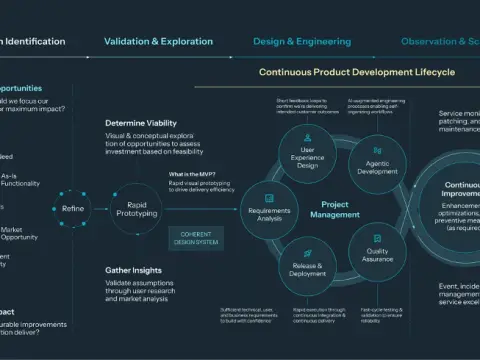
Software teams running AI coding tools are generating more output than ever before. Commits are up. Pull requests move faster. By the numbers, developer productivity is what the tools promised. Delivery performance is a different story. Many organizations report that deployments have slowed and governance overhead has grown. The AI tools worked. The system…
-
ServiceNow takes aim at enterprise AI’s workflow bottleneck with AI Workflow Factory
ServiceNow has launched two AI solutions that can help enterprises identify business processes ripe for automation, build the workflows to address them, and continuously improve them with AI agents. AI Workflow Factory and Autonomous Engineer, announced on Tuesday, will bring process discovery, AI-assisted development and workflow execution into a single…

-
Money can’t buy enterprise trust
I thought the AI boom was producing a new level of bad behavior , what with MongoDB CEO CJ Desai peacing out, not to mention Google’s earlier controversial “acquihire ” of Windsurf’s executive team. But I was wrong: Money has a long history of hollowing out our ethical norms. The problem in these and other AI moves isn’t really about the money, but rather…

-
Don’t buy a consultant’s AI framework
Every major consulting firm offers its own prebuilt architectural framework, model, or reference architecture for generative AI and agentic AI . The pitch is nearly identical from firm to firm: “We’ve done this before, we’ve packaged the patterns, and if you start from our blueprint, you’ll get down the path faster.” It’s an age-old consulting technique…

-
Knowing which vulnerability to fix first
Common Vulnerability Scoring System (CVSS) severity tells you how serious a vulnerability could be. Exploit Prediction Scoring System (EPSS) estimates how likely exploitation is in the next 30 days. Neither one, by itself, tells you what your team should fix first. Run a dependency scan on any moderately sized JavaScript project and you will probably see a…
-
What cloud infrastructure taught me about building billing systems
For years, I thought of billing as a domain I would have to learn from scratch. Ledgers. Taxes. Proration. Regulations. Money. After 11 years building cloud datacenter management systems, I assumed my infrastructure experience would take me only so far. I was wrong. A few years ago, when I began working on billing, what surprised me most wasn’t how…