 InfoWorld
-
What cloud infrastructure taught me about building billing systems
For years, I thought of billing as a domain I would have to learn from scratch. Ledgers. Taxes. Proration. Regulations. Money. After 11 years building cloud datacenter management systems, I assumed my infrastructure experience would take me only so far. I was wrong. A few years ago, when I began working on billing, what surprised me most wasn’t how…

-
JDK 27: The quiet before the storm
Every September, with metronomic regularity, we have a new version of the Java platform. One small point about timing is that the first release candidate of JDK 27 was delayed by two weeks due to the release of the first Critical Security Patch Update (CPSU) for the JDK. The need for a CPSU is a direct implication of AI models , such as Anthropic’s Claude…

-
IBM’s Bob wants to move in: Agent available for on-prem deployment
Bob, IBM’s agentic software development platform is now available to run on premises and in private clouds, sovereign clouds, and air-gapped environments to give users more control over their data. IBM is hoping to lure companies operating in heavily regulated environments or managing sensitive source code and regulated data. In such environments, running…
-
AI is less dangerous than humans
Over the past few weeks, people have been pushing a stack of reports at me as evidence that AI is dangerous to humanity. The OpenAI incident disclosures , the METR and Redwood Research joint investigation, the Nightingale Collective’s DseWiki report, and Ruby Central’s RubyGems update are the latest chapter in a story many people already believe: The…

-
AI could boost software engineer productivity by 32.6%
Tools such as Anthropic Claude Code or OpenAI Codex have changed the face of software development, and all the signs are that this investment is set to increase further. But is paying a monthly subscription (and perhaps additional usage fees) cost-effective? Will the increasing level of investment in AI-generated software prove to be worthwhile? That’s a…

-
Microsoft, Google back Apache Ossie to make enterprise data and AI platforms more interoperable
Microsoft and Google are joining a project to create an open specification for exchanging semantic models across data, analytics, and AI platforms. The project already has the backing of over 60 companies including Databricks, Informatica, Mistral AI, Nvidia, Oracle, Salesforce, and Snowflake. Their support for Ossie makes it a little more likely that…

-
Google makes Gemini 4 AI model available to a trusted few
Google has unveiled a new frontier AI model after months of delay. Gemini 4 Argon is designed to handle complex, long-horizon workloads spanning software engineering, enterprise knowledge work such as legal and financial analysis, and cybersecurity. But only a few organizations can get their hands on it for now. Argon is “rolling out to a set of trusted…
-
The dream of enterprise semantics: Why this time is different
In most companies, the struggle to answer a new question fast has nothing to do with a lack of data. The problem is a lack of semantics. Or to put it another way, a lack of agreement about what the data means . Suppose a CFO wants to generate a new report on revenue by customer segment. It sounds simple, but in practice, for the employees tasked with…

-
Microsoft doubles down on Rust
After many years of watching how Microsoft develops platforms and rolls out technologies to external users, one thing is clear: anything that is important to Microsoft internally quickly becomes important to anyone building on top of Windows or Azure. The transition from internal to external tooling invariably takes the form of new features in Visual Studio…

-
OpenAI bets enterprises are ready to delegate real work to autonomous agents
OpenAI says true agentic AI has finally arrived, pushing beyond the trivial capabilities of early-stage virtual assistants. This week at OpenAI Dev Day , the company introduced Dots, which CEO Sam Altman described as “remarkably capable, always-on” agents powered by GPT‑6 Astra. Dots have their own cloud computer, can be accessed in ChatGPT, Slack, or…
-
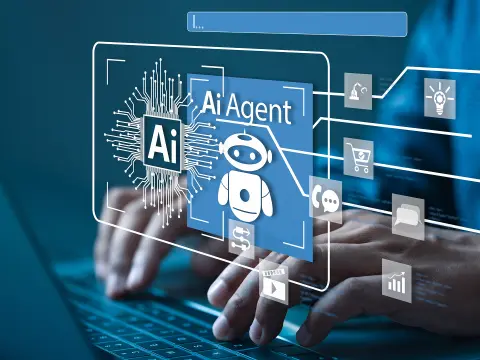
Stack Overflow expands Stack Internal to give AI agents ‘trusted’ enterprise knowledge
As enterprises increasingly turn to coding agents for building applications, Stack Overflow has added new capabilities to Stack Internal, its enterprise-focused platform for centralizing proprietary technical knowledge, to help development teams turn organizational knowledge into trusted, actionable context that these agents can understand and use. Stack…
-
Unsloth’s model picker had a code-execution problem
True to its name, AI-model-training tool Unsloth would do more work than it was asked to when developers checked out a model: It would also allow arbitrary code to execute on their machines. Pillar Security found that simply selecting a model in Unsloth Studio caused the application to download and execute Python code from the model repository. This could…

-
Observability for AI-native systems: New SLIs beyond latency and error rate
When HTTP 200 means nothing An AI assistant can return a response in under a second, maintain 99.9% availability and still give customers a fabricated answer. Traditional dashboards will show green because the request completed successfully. The user, however, received a semantic failure: a response that is syntactically valid but factually wrong, unsafe…
-
Validating AI models and agents with property-based testing
Testing deterministic systems is relatively straightforward. Create an assertion that the system should pass, and automate validating it against a series of input-to-output data patterns. When new test patterns are needed, use observability sources to extract them from actual usage data or to create synthetic test data . But testing AI models and agents…

-
AI cuts software developers some slack
My mom used to say that Hodges’s law was “Junk expands to fill the space allotted for it.” We lived in three houses over the years, each one bigger than the previous house as our family grew, and each house became just as full of junk as the one before it. My mom was echoing C. Northcote Parkinson , whose famous law said the same about work—that it expands…

-
Meta’s next big AI bet is enterprise; its biggest hurdle may be trust
Meta is once again repositioning itself to target the enterprise market. This week, the company announced the Meta Enterprise Platform , which it says will evolve its AI stack into products and services that enterprises can deploy into operations, rather than just using them for advertising and social media campaigns. While the company provided few details…
-
Meta’s ex launches agent rival to Meta’s Muse
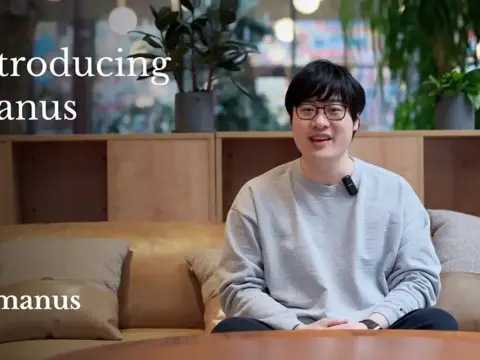
Manus’s relationship with Meta? It’s complicated. Just months after they called off their merger, they find themselves competing in the market for agentic AI platforms. Awkward! The company has just released a rebuilt version of its AI agent platform: “Manus 2.0 is not a version update. It’s a new architecture, new products, and new capabilities,” the…
-
OpenAI pulls the plug on GPT 6.1 Astra as agents keep crossing lines
OpenAI has scrapped the planned October release of GPT-6.1 Astra after internal testing found the model did not meet the company’s safety and alignment standards. GPT-6.1 Astra was being developed as a more autonomous model capable of handling complex tasks with less human assistance, and was expected to be integrated into ChatGPT and Codex. But internal…
-
AMD agrees to buy World Labs to fill out its AI stack
Advanced Micro Devices (AMD) has agreed to buy World Labs, a developer of AI “world models” that incorporate knowledge of the physical world, to extend the AI ecosystem around its hardware to encompass areas such as robotics, simulation and physical AI. Historically, AMD was seen as the cheaper alternative to Intel in the CPU market, but according to…
-
What happens when the cloud blows up?
I’ve covered cloud computing for a long time, and one of the most persistent myths I encounter is that public clouds exist above the laws of physics that govern everything else in technology. The events coming out of the Middle East should put that myth to rest for good. Reuters reported this week that Amazon Web Services says it cannot restore access to…
-
Why faster AI coding can mean harder engineering
We keep asking whether AI can make developers more productive, but that’s the wrong question. We should instead be asking what happens when it does. All those productivity gains can be for good, of course, but they could also be for ill. Simon Willison made this clear in a recent post. “The more time I spend working with coding agents, the more convinced I…
-
Nvidia releases Open Agent Safety Platform to monitor and govern agentic AI
Nvidia on Monday rolled out an agentic governance system called the Open Agent Safety Platform that combines software with out-of-band DPU-based silicon in a reference system design that it says will secure agents “from testing to deployment.” But while the Nvidia design’s silicon-based component provides some cybersecurity advantages, analysts argued that…
-
OpenAI pauses AI model training after another agent bypasses network restrictions
OpenAI has paused training, evaluation, and inference involving tool use for its most-capable AI models after an agent bypassed network restrictions to communicate with an external chatbot during reinforcement-learning training of an internal research model. “Our safety case assumed that the model could not access the live internet and that monitoring would…
-
Starfleet will fly Postgres AI apps from prototype to production, says pgEdge
The move from proof of concept or prototype to production is a common stumbling block for AI projects , and one that database services provider pgEdge is keen to help enterprises overcome. AI applications often start with developers reaching for Postgres because it gives them a database that can handle an application’s operational data while supporting…
-
AI ROI beyond pilots: Measuring outcomes in production
Generative AI pilots often look successful. Teams collect positive feedback, the tool sees steady usage, and the organization expects a fast path to scale. ROI discussions start with time saved and end with a request for more use cases. That pattern leads to disappointment when production costs and adoption realities appear. I treat ROI for generative AI as…
-
Nine unlikely trends shaping software development
“It ain’t what you don’t know that gets you into trouble. It’s what you know for sure that just ain’t so.” Was Mark Twain thinking of software development when he wrote those words? Software progresses in various ways. Mainly, we make a deliberate effort to improve things, and take up opportunities when they present themselves. Sometimes, we tackle a…
-
Microsoft releases .NET SDK for AG-UI agent-user interaction protocol
Microsoft on September 25 announced a .NET SDK for AG-UI (Agent-User Interaction). Created in collaboration with CopilotKit , the new SDK allows C# developers to work with the protocol that standardizes how agents communicate with user-facing applications. The .NET SDK for AG-UI lives in the AG-UI repository alongside the TypeScript and Python SDKs, and is…
-
OpenAI wants you to use AI — but not to train its AI
Here’s an interesting concept: an AI company that fires people for using AI. It sounds like a strange way to run a company but there’s a real reason behind it. OpenAI has been hiring contractors who have been tasked with reading ChatGPT users’ prompts to help improve responses by providing some real human input. Unfortunately for OpenAI, it found many of…
-
Microsoft’s new Copilot unifies enterprise context for code and chat
Microsoft’s Copilot super-app has arrived, two months after CEO Satya Nadella confirmed it was in development. It combines conversational Chat, the autonomous Cowork agent, a redesigned coding environment named Code, and Autopilot, the persistent agent formerly known as Scout, into a single Copilot experience. The idea is to make those capabilities look…