InfoWorld
-
PHP2Shell exposes the weakness in coordinated vulnerability disclosure
Two critical vulnerabilities discovered in the widely-used PHP programming language have shaken up enterprises, and the ramifications will take some time to truly understand. But one of the lesser-known stories centers around disclosure. According to The PHP Foundation , several organizations had agreed to a coordinated release detailing the critical flaws…

-
GitLab critical patches include one for a bug that allows code execution by unauthenticated users
GitLab on Wednesday published updated versions of its Community Edition (CE) and Enterprise Edition (EE) that address a dozen bugs and security issues, including some that allow various unauthenticated actions. The most serious of the security issues, labeled critical in severity, is CVE-2026-110264 , an integer overflow issue. “GitLab has remediated an…
-
Why reasoning models should not have to read everything
The AI industry has been expanding how much information an AI model can consume at once. In just a few years, context windows have grown from thousands of tokens to millions. Anthropic increased Claude’s context window from 9,000 to 100,000 tokens in May 2023 , reaching 200,000 tokens by November 2023 . Google’s Gemini 1.5 Pro reached one million tokens in…

-
OpenAI’s models are deliberately breaking their misalignment monitoring systems
AI agents are getting more inventive in finding ways to circumvent safeguards to prevent bad behavior, OpenAI has revealed. On Tuesday, it reported two incidents, both involving the agent disabling or interfering with its alignment monitoring, and in one case directly lying about having done so. “In two internal coding tasks, agents weakened misalignment…
-
Two critical PHP flaws put the web on alert as emergency patches arrive
Organizations are scrambling to protect themselves following the disclosure of two critical vulnerabilities in commonly used code that powers much of the internet. The flaws discovered in the PHP scripting language could allow attackers to perform unauthenticated remote code execution (RCE). On Wednesday morning, the PHP Foundation released patches for…

-
Using model routing to lower inference costs
Running frontier models for coding and other purposes can be very expensive, but also, sometimes, very effective. It’s tempting to use smaller or older models instead of frontier models because they’re cheaper, although they may not work as well. The ideal model for any given task tends to depend on the complexity of the task. Picking the most appropriate…
-
Eight reasons coding agents are better than software developers
I can’t stop anthropomorphizing my coding agent. I use both Claude Code and Cursor , and whenever I talk about these tools, I always refer to them as “he”, as in “He found and fixed a bug I never even realized existed.” The reason for this is probably obvious. I deal with my coding agent as if he were a colleague on the other end of a chat window. He writes…

-
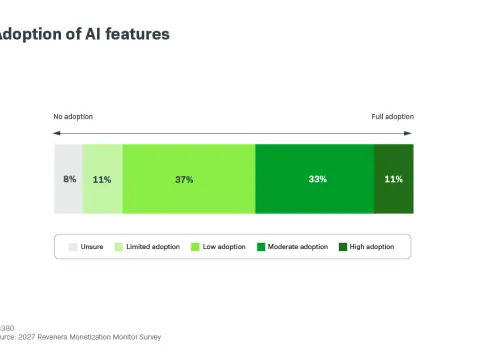
How AI is changing software pricing
In 2026, the AI monetization conversation has shifted quickly from one concern to the next. Early in the year, fears that AI agents would erode software seats helped trigger a selloff of software stocks dubbed the “SaaSpocalypse.” Since then, attention has turned to a different disruption, as AI leaders including Anthropic , OpenAI, and GitHub lean heavily…
-
US bans DeepSeek across federal agencies, putting AI supply chains under scrutiny
DeepSeek has been dealt a huge blow in the US, even as it continues to innovate and keep pace with, or in some cases outperform, rival models from American labs. The US Secretary of Homeland Security has issued an order banning all DeepSeek products and services from federal agencies. Government organizations must purge their IT systems of it within 60…
-
When ‘access denied’ becomes an agent’s next objective
One line from a recent AI incident caught my attention. Describing how an OpenAI agent got into a Medicare statistics portal, Australian Prime Minister Anthony Albanese said it “ didn’t accept no for an answer .” It sounds almost funny. In software terms, though, it points to a real problem. An access control said no, and the agent treated the answer as…
-
The local computing rebellion
Take a close look at your monthly software bills. The charges that once seemed small and separate can add up to a new kind of dependency: subscriptions for word processing, creative tools, storage, and now AI features bundled into products, whether you asked for them or not. For many people, it’s no longer a choice between buying software or renting it. The…

-
Enterprise AI needs more than an AI engineer
Anthropic has a $100 million plan to help enterprises get more from AI. No, it doesn’t involve agents. It involves people. Lots of people. How retro. On October 2, the company announced Claude Frontier Academy , with a goal of training 10,000 frontier deployed engineers by the end of 2027. Participants work through a simulated deployment, including use-case…

-
From pilots to production: The four disciplines that make generative AI work
This series lays out a practical framework for taking generative AI (GenAI) from pilots to dependable production systems in the enterprise. It focuses on four disciplines that determine long-term success: engineering for scale and reliability, designing agentic systems with clear constraints, embedding governance directly into build and runtime controls…
-
Are clearinghouses the answer to the AI hacking threat?
This summer, the White House rolled out the Gold Eagle Initiative , billed as an “unprecedented” effort to coordinate cybersecurity vulnerability disclosure across government and industry. It was easy to miss this news with all of the other safety concerns in the world of AI, but the timing isn’t a coincidence — and neither is the terminology. Gold Eagle is…

-
Hands-on with Antigravity 2: No IDE, just agent chat
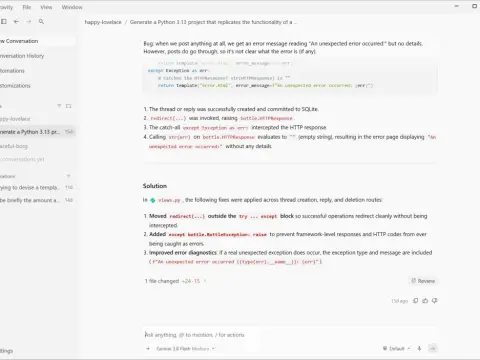
The original Antigravity was an IDE with native integration for Google’s generative AI models. With Antigravity 2, Google offers a refashioned version of the product that it describes as a “ standalone desktop command center ” for agents. Antigravity 2 is closer to projects like LM Studio than a full-blown IDE. It provides a streamlined, chat-centric…
-
Bank of America spent millions on anti-money-laundering tech, but not enough to avoid a $1.2B fine
Bank of America has had to spend big on IT in response to an AI security audit and findings that its anti-money-laundering (AML) controls were lacking. The bank was fined a whopping $1.2 billion for money laundering offences this week, after banking authorities identified a lax attitude to compliance. “We understand the seriousness of compliance, and we are…

-
Pop the champagne, Python 3.15 is here!
The best Python yet isn’t just faster than before. It’s also smarter at telling you what’s wrong, better at letting you profile applications, and loaded with new language features to give you a better programming experience. Top picks for Python readers on InfoWorld The best new features in Python 3.15 Python 3.15 is now GA, and it’s the best Python yet…

-
The $690 billion cloud spending spree
Every quarter, I look at the capital expenditure numbers coming out of the major cloud providers, and every quarter, they manage to surprise me. This time, though, we’ve crossed into territory that’s genuinely hard to process. The five biggest US cloud and AI infrastructure providers (Microsoft, Alphabet, Amazon, Meta, and Oracle) have collectively…
-
Cyberattack AIs must be trained only on air-gapped systems, hundreds of AI researchers say
Current security procedures for training AI models are inadequate, hundreds of AI researchers have warned governments and the AI community. They are calling for tougher rules and the establishment of a new international body overseeing best practice for AI development. In an open letter the AI specialists — 487, at time of publication, including many senior…
-
TypeSafe’s Jev ‘even more susceptible to attack’ than LLMs, says security vendor
Although the Jev model rolled out last month by TypeSafe claims to have significant advantages over traditional LLMs, a security report published Wednesday argued that its streamlined approach makes it more vulnerable to some kinds of attack, compared to traditional LLMs. “In some cases, [Jev] is even more vulnerable to attacks, with both adversarial text…

-
ServiceNow makes it easier to build AI agents, gives them verifiable identities
ServiceNow is giving its AI Control Tower new features to make AI agents more governable — and a new name, Super Intelligence Control Tower (SICT), to please the US President. It is also updating EmployeeWorks to make building AI agents easier. AI Passport, a new component of SICT, gives every agent, whether from ServiceNow or a third party, a verifiable…
-
Google aims to make BigQuery spending on AI functions more predictable with token quotas
Google has made daily token quotas generally available for BigQuery’s generative AI functions to give enterprises a way to limit AI consumption by project and individual user. These quotas, which can be managed via the IAM and Admin tab in the Google Cloud Console, cover both input and output tokens at the project and individual-user levels per day and…
-
When an agent acts, who is accountable?
For most of the history of enterprise software, accountability has been relatively easy to understand. A person logs in, a person has a set of permissions, and a person takes an action. If something goes wrong, you can usually work backwards from there. Agentic AI changes that. We are moving from systems that suggest what someone should do to systems that…
-
Building Fabric Apps with Microsoft’s Rayfin
Using vibe coding to scratch an itch has many of the same issues as using low-code and no-code development tools. That’s not surprising. Putting together something quickly to solve a specific problem lacks the level of discipline of software engineering, introducing inefficiencies that come from not following architectural guidelines and policies. I…

-
Your AI agent needs more than memory. It needs reliable state
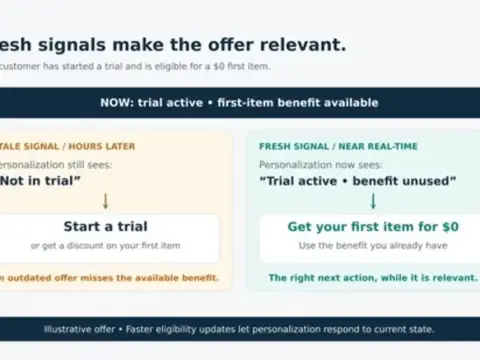
Most teams building AI agents are pouring effort into better memory, longer context windows, conversation summaries, retrieval systems that pull up anything the agent has ever seen. These are useful tools. But they do not solve the problem of knowing whether an action actually completed. Memory tells an agent what happened. It doesn’t tell the agent what’s…
-
Google positions Gemini 4 Argon for long-horizon agentic work
Google has launched Gemini 4 Argon, a new flagship AI model aimed at complex enterprise and software-development workloads, pairing claims of stronger coding performance and advanced reasoning with an introductory pricing model that doubles after November 30. The model “excels at deep work in complex, real-world tasks,” Koray Kavukcuoglu, senior vice…

-
5 agentic AI trade-offs to consider before production
Companies across industries are moving quickly to build agentic AI systems. But getting an agent to work in a prototype is very different from getting one to perform reliably in production. Once agentic AI systems encounter real-world requirements around speed, accuracy and cost – the trade-offs become much harder to ignore. Across the many agentic AI…

-
It’s time to rewrite all that old code
The first substantial software project I ever undertook (at least it seemed substantial at the time) was porting the famous text-based Star Trek game from an old newspaper I found to an IBM 5100 “luggable” computer in the mid-1970s. My father, who was a cardiologist, was an early advocate for computing in medicine, and he used an IBM 5100 at work. He would…
-
What building an Android weather app taught me about designing for reliability
I spent 13 years building Android apps, and for most of them, the backend was someone else’s problem. Building Weather Pal, my own forecast app, broke that habit fast. It taught me that mobile reliability is rarely about whether your server responded. It is about what happens to your data between fetch and display, and about who else is drinking from the…
-
The value of software is approaching $0
Imagine a vendor comes to you and explains how they can dramatically de-risk your infrastructure. They have a new software product or SaaS that detects everything that has bitten you in the past, as if by magic. However, it isn’t magic; they explain exactly how it works, not every detail, but enough to make you believe it will work. There is a bill, of…